The audition notice is open on your phone. Your child is excited about the show, and you are trying to decode phrases such as “prepared selection,” “cold reading,” and “dance call.” Does everyone already know what these mean? What should you bring? What happens if your child forgets the words?
A first audition feels easier to approach when the process is less mysterious. Each theater has its own format, so the production’s instructions are always your starting point. The guide below explains common possibilities and how families can prepare without turning audition day into an all-or-nothing event.
Read the notice before choosing material
Audition requirements can differ even between productions at the same organization. One may provide a song excerpt; another may ask performers to select their own. Some include movement, a scene reading, or a short conversation. Others separate these activities into different appointments.
Read the complete notice together and pull out the practical details:
- Age or grade eligibility and any registration requirements
- Date, location, arrival instructions, and expected duration
- Requested song, scene, or other preparation
- Music format, accompaniment instructions, and time limits
- Rehearsal and performance dates, including required attendance
- How and when audition results will be communicated
If something is unclear, ask the listed contact. A specific question such as “Should the song be memorized?” is more useful than guessing based on a friend’s experience elsewhere. Check for updated instructions before audition day.
Prepare the requested task at a manageable pace
Once you know what is required, work backward from the date. Several short practice sessions generally make a more practical family plan than leaving everything until the night before. Include time to obtain the correct music or review any supplied material.
For a song, help your child understand what the character wants and what the words mean. For a scene, read it aloud together and notice who is speaking to whom. If movement is part of the audition, comfortable practice clothes and some familiarity with following directions may be more useful than inventing an elaborate dance to present.
Keep feedback selective. Ask whether your child wants help, then choose one useful adjustment rather than delivering a running commentary. The aim is familiarity with the task, not a perfectly polished imitation of an adult performer.
Make a simple arrival plan
Plan transportation and allow enough time for the stated check-in procedure. Bring whatever the notice requests, along with water and any permitted personal items. Wear clothing suitable for the activities and follow any footwear instructions, especially if dancing is involved.
Check that music files open, printed pages are legible, and any required forms are complete. Do this ahead of time so your child can focus on the audition when you arrive.
Have calendar conflicts ready to report accurately. Include recurring commitments as well as known absences. Hiding a conflict in the hope of improving casting chances can create a much harder conversation later.
Before arriving, confirm where parents should wait and whether they may enter the audition space. Policies vary. Tell your child the plan once you know it, including how you will reconnect afterward. A predictable goodbye can be more helpful than a long last-minute pep talk.
Understand the activities you might encounter
A singing portion may involve the prepared material described in the notice. Your child may be asked to introduce themselves and their selection, begin at a designated point, or try a section again. Follow the team’s directions about when and how to start.
A cold reading means working from a script with little preparation time. Your child can read carefully, listen to the other person, and make a reasonable choice about what the character means. If a word or direction is unclear, a brief question is appropriate.
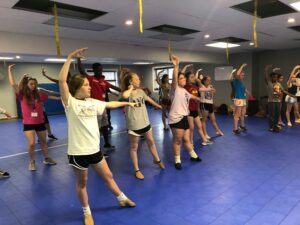
A movement or dance portion may involve learning a short sequence with a group. Encourage your child to pay attention, respect others’ space, and keep following along if they miss a step. The audition instructions should explain whether prior dance experience or a prepared routine is expected.
Being asked to repeat something differently can simply be part of the process. “Try it as though you are persuading your friend” gives a performer a new task. It does not automatically mean the first attempt was wrong.
Have a plan for ordinary mistakes
Forgotten lyrics, a missed entrance, and a moment of confusion are all possible. Practice a simple response before the day: pause, listen, and ask what to do next if needed. “May I start that phrase again?” is a reasonable question, though the team will decide what time allows.
Parents can help by avoiding predictions such as “You’ll definitely get a part” or “You won’t be nervous once you start.” Neither is something you can guarantee. A steadier message is, “You’ve prepared what they asked for. Now you can show them your work and follow their directions.”
Know what a callback does and does not tell you
A callback is another opportunity for the team to see or hear performers, often with different material or combinations of people. Follow the new instructions carefully; preparation may change from the first audition.
Receiving a callback does not guarantee a particular role. Not receiving one does not always mean a child is out of consideration. Processes differ, so rely on the organization’s stated procedure rather than speculation among families.
Casting also involves the needs of the production. A role decision is not a complete assessment of your child’s ability, effort, or future potential. Give disappointment room if it comes, and avoid comparing children or demanding that your child feel grateful immediately.
End the day with perspective
Afterward, let your child choose how much to discuss. “What surprised you?” or “What would you like to remember for next time?” can open a useful conversation without turning the car ride into a performance review.
A first audition provides experience, whatever the casting result. For information about Rooted Tree Productions, visit rootedtree.org and contact the organization with questions about the preparation and expectations for a specific program or production.