
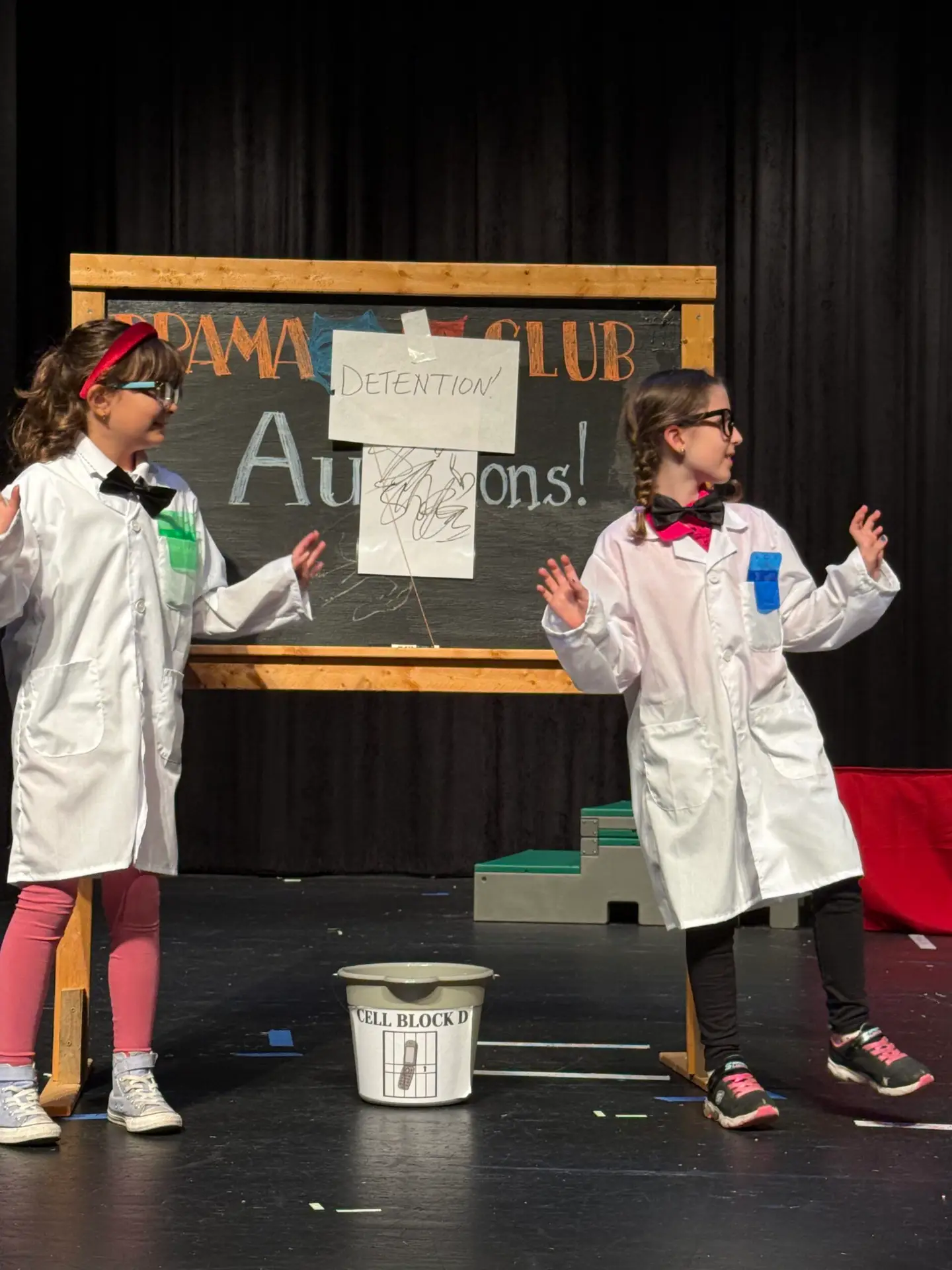
From the audience, theater looks like songs, scenes, costumes, and choreography. Parents see the finished performance and applaud what their child can do onstage. The work that made it possible can be harder to spot.
A child may have spent weeks practicing how to listen for a cue, keep track of a change, ask for clarification, or try a scene again after receiving feedback. These are ordinary rehearsal tasks, and they offer useful opportunities to practice skills beyond performing.
No activity produces the same results for every child. The teaching, environment, role, and child all matter. Still, knowing what to look for can help parents recognize meaningful work that a final bow does not fully show.
Listening with a reason to listen
In a scene, listening affects what happens next. A child needs to hear a cue, notice a partner’s timing, and respond to the moment rather than simply wait to say a memorized line.
Imagine two performers rehearsing a disagreement. If one changes the pace, the other may need to adjust. They have a practical reason to pay attention to another person’s words and actions.
Parents can ask, “What tells you it is your turn to enter?” or “Did anything change when you rehearsed with your scene partner?” Those questions reveal more than asking whether the child remembered every line. Listening is part of the work even when their own voice is quiet.
Turning feedback into a next attempt
A direction such as “Pause before that line” gives a child a specific change to try. They can make the adjustment, see how it affects the scene, and try again.
This creates an opportunity to practice receiving feedback without treating every correction as a judgment of their worth. That opportunity works best when the feedback is clear and respectful. A child who does not understand a note should be able to ask what it means.
At home, you might say, “What is one change you are working on?” Skip the demand for a perfect result. Sometimes the useful progress is recognizing that an instruction is confusing and asking for an example.
Preparing for other people to depend on you
Theater gives preparation a shared purpose. Knowing an entrance helps a scene run. Bringing the required rehearsal materials avoids scrambling. Learning an assigned section gives partners something to work with.
Children can practice building a routine around those responsibilities. For a younger child, that might mean checking a bag with a parent. An older child might manage a rehearsal calendar and identify when a busy school week calls for earlier practice.
Support should fit the child. Handing over every logistical detail at once may create frustration rather than independence. Choose one responsibility they can reasonably own, then review how it is going. Remember that transportation, costs, and adult communication may still belong with the adults.
Making something with people who have different ideas
A production brings individual choices into a shared plan. One child may have an idea for a gesture; another may interpret the scene differently. The director helps determine what serves the production, and performers practice working within that direction.
Collaboration can include offering an idea, hearing “try something else,” and giving another person room to contribute. It also includes knowing when a rehearsal needs focused attention rather than more suggestions.
A useful question is, “What did your group have to figure out together?” You might hear about spacing, a transition, or a moment that became clearer after several attempts. Those details show collaboration as actual work, with occasional friction and adjustments.
Understanding a point of view
Playing a character invites questions: What does this person want? What do they know? Why might they react this way? The answers help an actor make choices that an audience can follow.
A child does not have to agree with a character to explore those questions. They can practice distinguishing their own reaction from the character’s circumstances.
That is a concrete opportunity to consider perspective. It does not guarantee that a child will become more understanding in every situation. Parents can keep the conversation grounded: “What do you think your character misunderstands in that scene?” Let the child think aloud without turning the discussion into a moral test.
Recovering when a plan changes
A rehearsal may include a missed cue, forgotten movement, or prop placed in the wrong spot. With appropriate guidance, children can practice pausing, checking what is needed, and returning to the scene.
The aim is a workable response, not acting as though mistakes never bother them. A child might feel embarrassed and still be able to listen to the next instruction. Another may need a brief reset before trying again.
Afterward, ask, “What helped you get going again?” Praise a specific response you observed, such as asking for the cue to be repeated. Avoid celebrating risky improvisation or suggesting children should solve every problem alone. Safety concerns belong with a responsible adult.
Speaking up about what they need
Theater also offers chances to practice useful questions: “Could you show me that step again?” “Where should I wait?” “Who can help me with this costume problem?” Asking clearly is part of participating.
Children should have support speaking up when something hurts, feels unsafe, or involves unwanted treatment. Following direction and being considerate do not require staying silent about a problem. Parents can help children identify the appropriate adult and rehearse a simple question or concern.
Notice progress without grading the experience
You do not need a checklist after every rehearsal. Ask a question, listen, and let your child decide how much to share. Some days the most important news will be a funny scene or a costume detail.
Over a season, you may notice a child asking a clearer question, organizing their materials, or taking another attempt at something difficult. Let those moments count alongside the performance.
Explore rootedtree.org for Rooted Tree Productions program information and contact options. Ask about the rehearsal experience and consider how it fits your child’s interests and needs.