
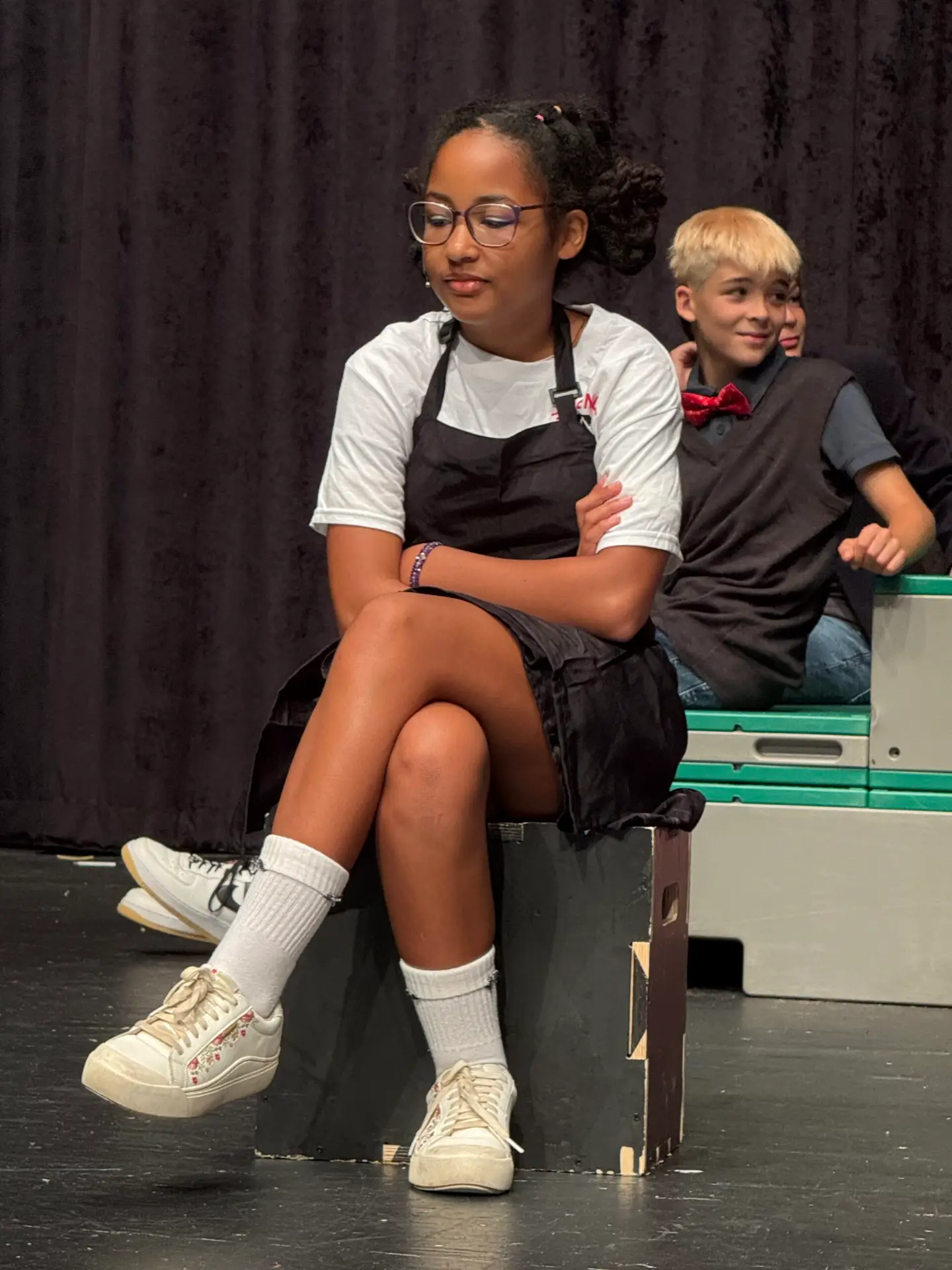
Your child sings every word of a favorite musical at home, then becomes quiet when someone asks them to perform. They invent elaborate characters with a sibling but hesitate to introduce themselves to a new group. You wonder whether musical theater would be a wonderful opportunity or simply too much.
Shyness alone does not answer that question. A child can enjoy storytelling, music, and performance while needing time to feel comfortable with unfamiliar people. The more useful questions are whether your child is interested, what the program expects, and how its adults respond when a young person needs support.
Start with curiosity, not a confidence project
Before researching auditions, ask what appeals to your child. Is it singing? Costumes? Dancing with a group? Playing someone completely different? Their answer may reveal a genuine interest that gets overlooked when the conversation centers on being shy.
Try, “Would you like to find out what a rehearsal is like?” That gives your child a smaller question to answer than, “Do you want to get onstage?” You can also ask what feels worrying. Walking into an unfamiliar room is a different concern from singing alone, and each calls for a different kind of preparation.
Avoid presenting theater as something that will fix their personality. Quietness is not a problem to solve. The goal is to help your child explore an interest and gain experience, with their own preferences taken seriously.
Why the structure can appeal to quieter children
Everyday social situations can leave a child wondering what to say next. Theater offers some concrete starting points: a script, a character, a song, a movement sequence, or a shared task. There is something to work on together.
For example, two cast members may rehearse a short exchange several times. They already know the words and have a reason to talk. An ensemble may practice entering on a musical cue, giving everyone a common focus. Familiar routines can make participation feel more manageable for some children.
Over time, experiences like asking a question, trying an idea, and contributing to a scene may support confidence. The pace varies. Enjoying rehearsal does not necessarily mean your child will suddenly love public speaking at school, and that does not diminish the value of the experience.
Look closely at the environment
A program’s approach matters more than a promise that theater builds confidence. Ask practical questions before making a commitment, especially if your child has never participated in a group performing arts activity.
- What happens during the first meeting or rehearsal?
- How do instructors introduce new participants to the group?
- What is expected when a child feels nervous about an activity?
- How much individual singing, speaking, or dancing does the program involve?
- Who should a family contact with questions before starting?
Listen for clear explanations and realistic expectations. A thoughtful answer may describe how activities are introduced while also explaining which responsibilities every participant must eventually meet. Be cautious about guarantees that any child will become outgoing or never feel uncomfortable.
If your child needs a particular adjustment, ask directly whether it is available. Do not assume that observation visits, parent attendance, smaller groups, or alternative audition arrangements are offered. Confirm the details with the organization.
Choose a first step your child can picture
“Try theater” can sound enormous. A concrete first step is easier to understand. Depending on what is available, that might be attending a production, reading about a class together, or asking a program leader how beginners get started.
If your child wants to participate, look at the commitment as a family. A short introductory experience and a full production can have very different demands. Consider rehearsal length, group size, transportation, schoolwork, and the performance schedule rather than choosing only by the show title.
Then describe the next step plainly: where you will go, who will meet them if that information is known, and when you will return. Leave room for uncertainty. Saying, “We can ask what happens next,” is more trustworthy than promising an experience you cannot control.
Practice familiarity without rehearsing every moment
A little preparation can help. Your child might practice saying their name, asking where to put their belongings, or telling an instructor, “I didn’t hear the direction. Could you repeat it?” These useful phrases can travel with them into many activities.
Keep home practice light and optional. Turn-taking games, reading characters aloud, or singing together can create enjoyable opportunities to experiment. Your living room does not need to become an audition room, and every relative does not need a performance.
Let your child decide whether they want an audience for practice. Asking before recording or sharing a clip also shows that their comfort matters. Trust is more helpful than a surprise spotlight.
Notice progress in specific, ordinary moments
After an activity, make space before asking for a full report. Some children want to talk immediately; others need the ride home to settle. A simple “What did you work on?” may invite more conversation than “Were you brave?”
When you offer encouragement, name something real: “You asked for help when you needed it,” or “You kept working on that entrance.” Avoid comparisons with louder children or with a sibling who loves attention.
Check the overall pattern, too. Some nerves can coexist with excitement and a desire to return. Repeated distress, dread that keeps growing, or a clear wish to stop deserves attention. Talk with your child and the program about what is happening. Another format, a later start, or a different activity may be a better fit.
Let interest lead the decision
Your child does not have to become the loudest person in the room to belong in a creative group. Listening, observing, imagining, and working thoughtfully with others are meaningful contributions.
If musical theater interests them, explore a manageable next step together. Visit Rooted Tree Productions to learn about its programs and use the contact information there to ask questions about your child’s possible starting point.